← back
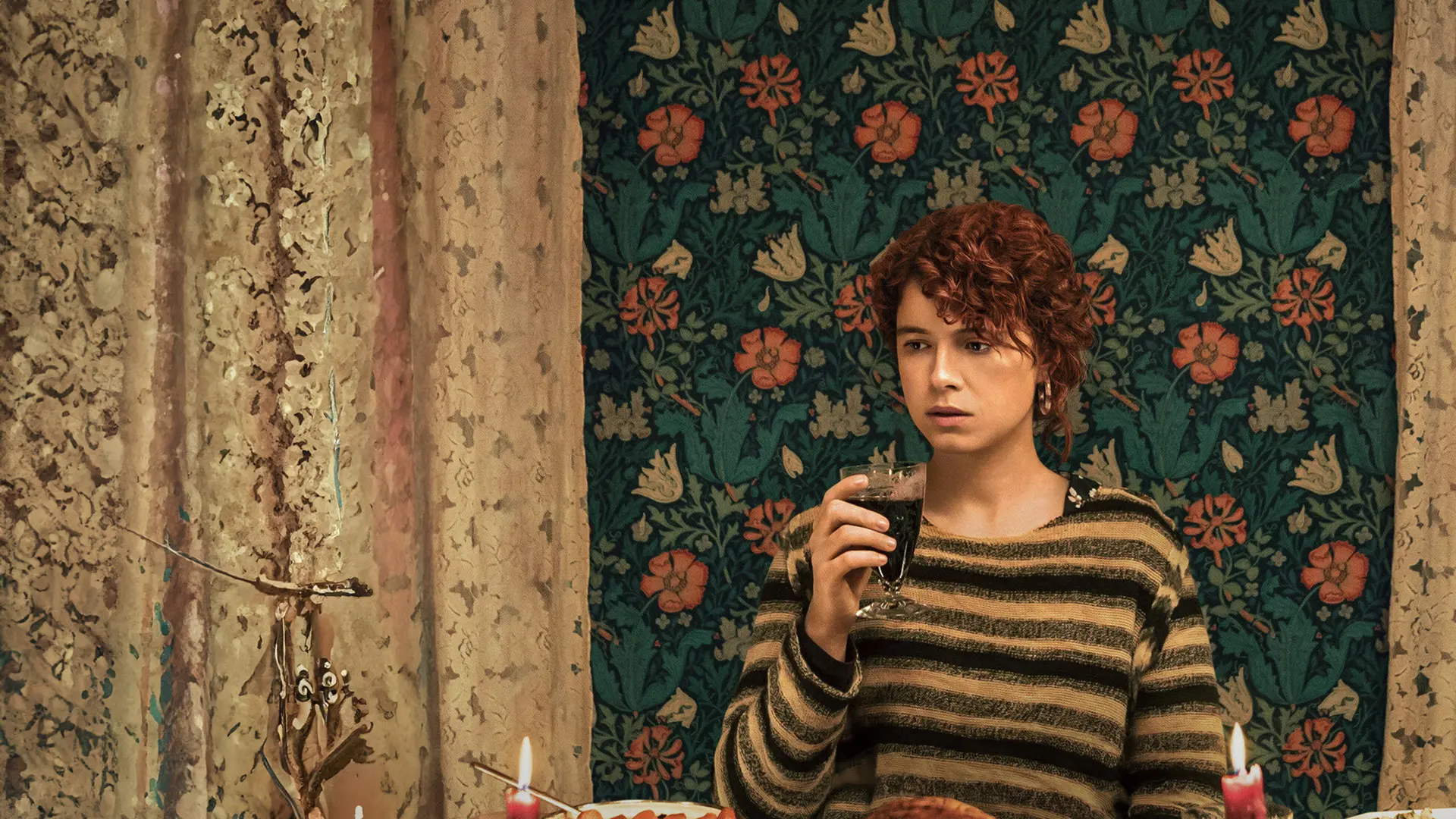
“I’m thinking of ending things.
Once this thought arrives, it stays. It sticks. It lingers. It dominates. There’s not much I can do about it. Trust me. It doesn’t go away. It’s there whether I like it or not. It’s there when I eat. When I go to bed. It’s there when I sleep. It’s there when I wake up. It’s always there. Always.
I haven’t been thinking about it for long. The idea is new. But it feels old at the same time. When did it start? What if this thought wasn’t conceived by me but planted in my mind, predeveloped? Is an unspoken idea unoriginal? Maybe I’ve actually known all along. Maybe this is how it was always going to end.”
― Iain Reid, I'm Thinking of Ending Things
ABOUT (spoiler warning!)
The story follows a young woman who goes on a long ride with her boyfriend, Jake, to visit his parents living on a remote farm. As the story progresses, things start to get more and more eerie. In every scene, something feels different. Everything changes: the ages of the characters, their outfits, the situations. As if it were just memories loosely connected by the only constants: the place and the woman. But even she isn’t spared. Her outfit changes, her profession, her memories, and even her name.
At this point, only one thing stays as it is: her thinking of ending things between her and Jake. The thought lingers. It is almost an intrusive thought, like the ringing phone disturbing the quiet atmosphere of each scene. Parts of the story are interrupted by scenes showing an old, apathetic janitor. Slowly, we’re led to the realization that it’s never been about the woman. It’s been all about Jake, the old janitor, who leads such a lonely, unfulfilling life that he can’t find solace anywhere, not even in his daydreams about being young and taking his girlfriend for a visit to his parents’ farm. If the scenes felt like memories loosely connected into one story, that’s because they literally were.
But even in his dreams, he can’t imagine himself happy and in a functional relationship. Thinking of ending things is no longer just about their relationship; it’s about ending his own life. As Jake said earlier: life can be brutal on a farm.
HURTFULNESS: 7/10
I identified with Jake a lot, that’s why watching the movie hurt so much. He’s quite intelligent, but has troubles with communication and he’s disabled by depression.
That’s why he has a mediocre job, no relationships, no purpose in life. He had a chance to reverse his fate. He didn’t take it, and his life flew by in vain. Do I share his fate? What if I’ve actually known all along, too?